
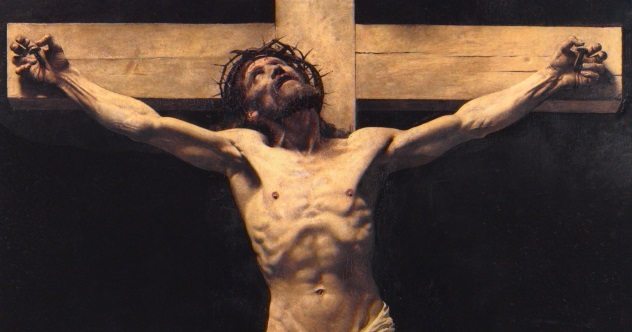
The Crucifixion of Christ
The European Court of Human Rights has ruled against the use of crucifixes in classrooms in Italy. It said the practice violated the right of parents to educate their children as they saw fit, and ran counter to the child’s right to freedom of religion.
As expected, the Vatican objected vigorously – no doubt seeing this as an encroachment on their corporate mandate – if not very lucrative business that continues to milk its customers with the promise they are able to save their sinful souls from being condemned and dragged off to hell. ( Where is that place, anyway?)
A Vatican spokesman told Italian TV: The crucifix has always been a sign of God’s love, unity and hospitality to all humanity.
Well, with respect to that particular statement – and in particular the reference to God’s love – one might well want to take a good look at a crucifix. It seems to me it seems to depict the horrible suffering and barbaric death of an individual nailed to a wooden cross.
How could anything so cruel and abhorrent be central to any religion where the subject in question is supposed to be the son of an all powerful deity, and “a loving God”? Obviously his love does no extend to his own son since what father would have allowed his own son to suffer such a savage and excruciatingly painful death while supposedly having the power to stop it at any time?
And so the real question is: how could God have allowed this to happen? The answer is – as Nietzsche put it once ” downright terrifying in it’s absurdity: God gave his Son for the forgiveness of sins, as a sacrifice. The guilt sacrifice, and that in its most repulsive and barbaric form, the sacrifice of the innocent man for the sins the guilty! What atrocious paganism!”
I guess for some folks the Dark Ages clearly aren’t over yet as they continue put their faith in this bizarre tale of human sacrifice and the baroque and antiquated institution that perpetuates this kind of barbaric pagan mythology.